


Espresso packs a lot of variables into about 25 seconds. Nudge the grind by a hair, let the machine sit cold for ten minutes, or lean a little harder on one side of the tamper, and the same bag of beans can taste like two entirely different coffees.
The reassuring part is that most bad shots are not mysterious. They come from a short list of repeatable mistakes, and almost every one has a fix you can test on your next pull. Here are the seven that trip people up most often.
1. Assuming Your Grind Setting Is the Same Every Day
Grind size affects espresso more than anything else, and it changes constantly. Beans lose moisture and carbon dioxide as they rest. Humidity shifts between morning and afternoon. A new bag may need a setting several notches away from the last one, even if it is the same roast from the same roaster.
The signs are easy to read once you know them. A shot that gushes out in 15 seconds, runs blond, and tastes thin is grinding too coarse. A shot that drips, chokes, or crawls past 45 seconds is grinding too fine.
Adjust in small steps and change only one variable at a time. After you move the grinder, purge a gram or two through it, because the first dose out usually carries remnants of the old setting. Then pull again and taste before you touch anything else.
2. Channeling: Water Taking the Path of Least Resistance
Channeling happens when water punches through a crack, a clump, or a thin spot in the puck instead of pressing evenly through the whole dose. Part of the coffee gets over-extracted and part of it barely gets touched, so the shot tastes harsh and hollow at the same time.
Watch for a shot that starts as a gusher and then slows to a dribble, spritzing from a bottomless portafilter, or a spent puck with a visible hole or divot. Fixing it is mostly about preparation:
- Break up clumps. A simple needle tool (often called a WDT tool) stirred through the grounds before tamping makes a surprising difference.
- Level before you press. Settle the bed with a gentle shake or a leveling tool so the top of the puck is flat.
- Tamp straight down, once. Even pressure matters far more than heavy pressure.
- Match dose to basket. An overfilled or underfilled basket makes an unstable puck.
- Stop knocking the portafilter on the counter. It feels tidy, but it cracks the bed and invites channeling.
3. Confusing Sour Shots With Bitter Shots
These two problems feel similar and need opposite fixes, which is why so many people spend a week making things worse.
A sour, lemony, almost salty shot is under-extracted. A bitter, dry, ashy shot that leaves your tongue feeling rough is over-extracted. Both can taste "strong," so taste carefully before you adjust.
- Under-extracted (sour, thin, sharp): grind finer, add a little more coffee to the basket, or pull a slightly longer shot.
- Over-extracted (bitter, dry, hollow): grind coarser, shorten the shot, or reduce the dose.
Keep in mind that some acidity is desirable. A bright shot with fruit or citrus notes is different from a shot that makes you wince. Aim for balance, not for the total absence of bite.
4. Grinding Too Far Ahead or Buying Pre-Ground
Coffee begins losing aromatics within minutes of being ground. If you grind a batch in the morning and pull shots through the afternoon, the later shots will run faster and taste flatter than the first. Grind per shot whenever you can.
Whole beans deserve the same attention. Store them airtight, away from light and heat, and not in the warm spot next to the grinder. Beans roasted a few days to a few weeks ago tend to behave best, since very fresh coffee releases gas and can make shots erratic. Freezing whole beans in a sealed bag is a reasonable option for longer storage, as long as you dose straight from frozen rather than thawing and refreezing the same beans repeatedly.
5. Skipping the Scale
Judging the dose by eye and the yield by color is the hardest habit to break and the easiest one to fix. Without numbers, you cannot repeat a good shot or diagnose a bad one.
Pick a starting recipe and write it down. A common place to begin is 18 grams of coffee in, 36 grams of liquid out, in roughly 25 to 30 seconds. That is a starting point, not a rule, and different beans, baskets, and machines will want their own version.
Weigh the dose before you tamp and set the cup on a scale while the shot pulls. Time is useful information, but yield and taste should drive your decisions. If 36 grams tastes sour, try 40 before you change the grind.
6. A Cold Machine and a Cold Cup
Many home machines need 15 to 30 minutes to reach a stable temperature, and a machine that is still warming up will pull sour, uneven shots no matter how well you dialed in. Leave the portafilter in the group head while it heats, pull a blank shot or two, and warm your cups with hot water.
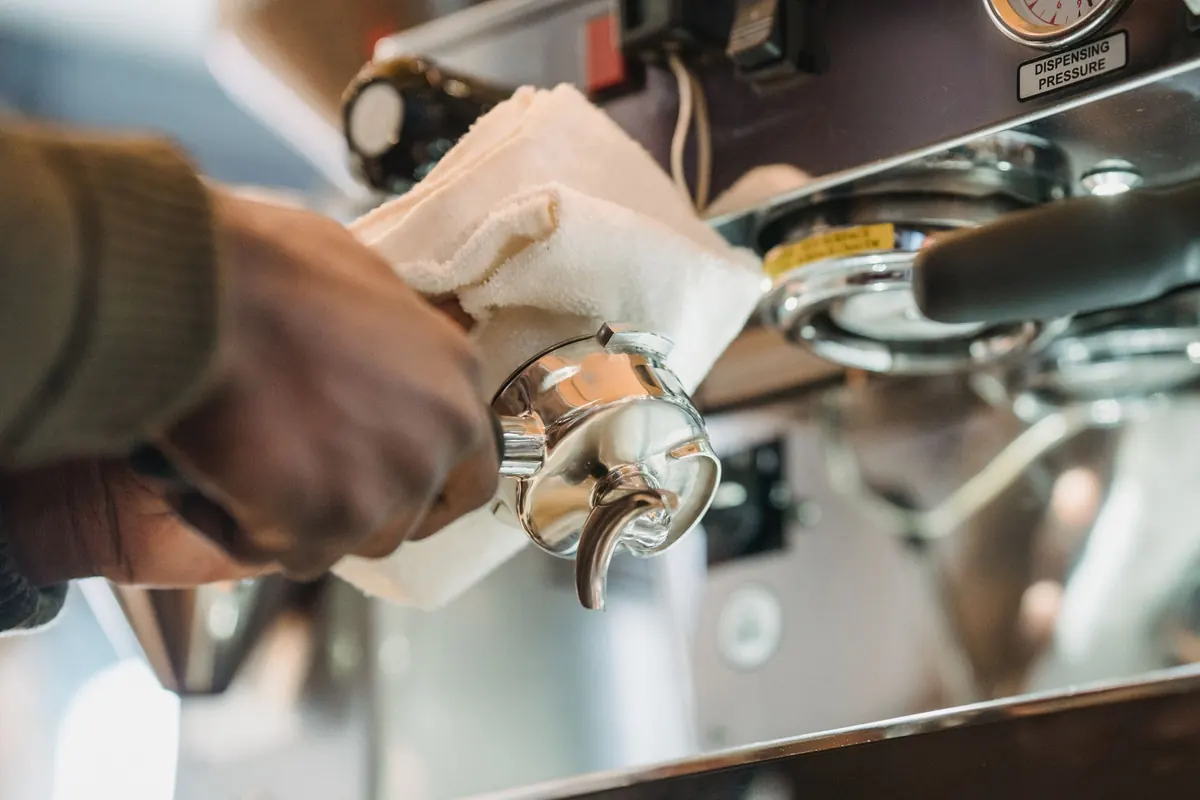
Maintenance matters just as much. Backflush on the schedule your machine's manual recommends, keep the shower screen and basket clean, and descale according to the manufacturer's guidance, especially if your water is hard. Stale oils in the group will make every shot taste dull and bitter, and no grinder adjustment can rescue that.
7. Tamping Harder to Slow Down a Fast Shot
Tamping levels the bed. It does not control flow. If a shot runs in 15 seconds, pressing down twice as hard will barely change the time, and pressing unevenly will create the channeling you were trying to avoid in the first place.
Grind size and dose control how fast the shot runs. Tamp consistently, keep the bed level, and take your speed problems back to the grinder.
A Short Routine That Fixes Most Shots
Once you know what to look for, dialing in becomes a loop rather than a guessing game. Try this each morning:
- Weigh your dose and set your target yield.
- Grind fresh, break up clumps, level, and tamp straight.
- Pull onto a scale and stop at your target.
- Taste. Sour? Go finer or slightly longer. Bitter? Go coarser or slightly shorter.
- Write down the grind setting, dose, yield, and time.
That last step is the one people skip, and it is the one that makes tomorrow easier. With a few notes, you start each session from a known point instead of starting over. You will still pull the occasional mediocre shot, and that is fine. Pour it over ice with milk and move on. Repeatability, not perfection, is what makes home espresso worth the effort.
Photo: zveat / Pixabay
Related posts
More stories you’ll love reading