

A pitcher of iced tea is one of the small mercies of a hot day. Bad iced tea is everywhere too: bitter, watery, tasting faintly of the back of the fridge. The fixes are not complicated. Most of them come down to three things — how long the leaves stayed in the water, how strong the tea was before the ice went in, and whether the sugar had anywhere to dissolve.
Get those right and you can keep a pitcher going all week and pour a better glass than most cafés sell.
Choose Tea That Tastes Good Cold
Not every tea survives the trip to a cold glass. Malty blacks — Assam, Ceylon, a solid breakfast blend — are the classic choice and hold up to lemon and plenty of ice. Roasted oolongs and Darjeeling work with a lighter hand. Sencha and dragon well stay fresh and grassy when brewed cool, and hibiscus, rooibos and straight mint are forgiving.
Avoid teas built on fine dust. The tiny particles in cheap bags extract fast and turn bitter before you notice. If bags are what you have, use more of them and pull them sooner. Loose leaf gives you more control, but technique matters far more than format.
Two Ways to Brew
Hot brew, then chill fast
Hot brewing is the quick route, and the one most people get wrong. Brew a concentrate at double strength — two tea bags or two teaspoons of loose leaf per cup of water — because ice and cold water will dilute it later. Use water just off the boil for black and oolong, around 200°F, and noticeably cooler water for green and white teas, closer to 175°F.
Steep black tea three to five minutes, green tea two to three, then get the leaves out. Pour the concentrate into a pitcher with an equal volume of cold water and refrigerate. To chill it fast, pour it over ice in a jar and stir; quick cooling keeps the flavor bright instead of steeped and dull.
Cold brew, for a softer result
Cold brewing takes planning and almost no skill. Use about half again as much leaf as you would for hot tea — roughly 1½ tablespoons of loose leaf per quart of cold filtered water — and leave it in the fridge. Green tea needs four to six hours; black, oolong and most herbals want eight to twelve.
Strain through a fine sieve, then taste. Cold brew leans soft and mellow, with less astringency and a quieter aroma than hot-brewed tea, and it keeps a day or two longer.
Keeping Bitterness Out
Bitterness is almost always a process problem, not a leaf problem.
- Set a timer. Tea left in the water for twelve minutes while you answer email is bitter tea.
- Don't squeeze the bags. That hard final press pushes out the most astringent compounds.
- Remove the leaves before chilling. Cold slows extraction; it does not stop it.
- Skip the rolling boil for green and white tea. Let the kettle rest a minute.
- Try a small pinch of baking soda in a quart of black tea if it still tastes sharp. It softens the edge without leaving a taste of its own.
- Taste before you sweeten. Sugar hides bitterness rather than fixing it.
If a batch has already gone bitter, dilute it with unsweetened tea or water and serve it over plenty of ice.
Sweetening Without a Gritty Bottom
Sugar does not dissolve in cold tea. Stir it into a glass and you get sweet sips followed by a spoonful of grit. The fix is simple syrup: one part sugar to one part water, heated just until the sugar disappears, then cooled and kept in a jar in the fridge. It lasts two to three weeks and dissolves instantly.
Start with a teaspoon or two per glass, or about a quarter cup per quart, and adjust from there. Honey, agave and maple syrup work too, but warm them with a little hot water first so they blend. If you are brewing hot, stir sugar into the concentrate while it is still warm.
For a crowd, leave one pitcher unsweetened and let people sweeten their own glasses. Fresh mint, sliced peaches, berries or a few basil leaves added to the pitcher for an hour give flavor without sugar. Strain them out if the tea will sit longer than a day, since the fruit goes soft and dull.
Ice, Dilution, and the Pour
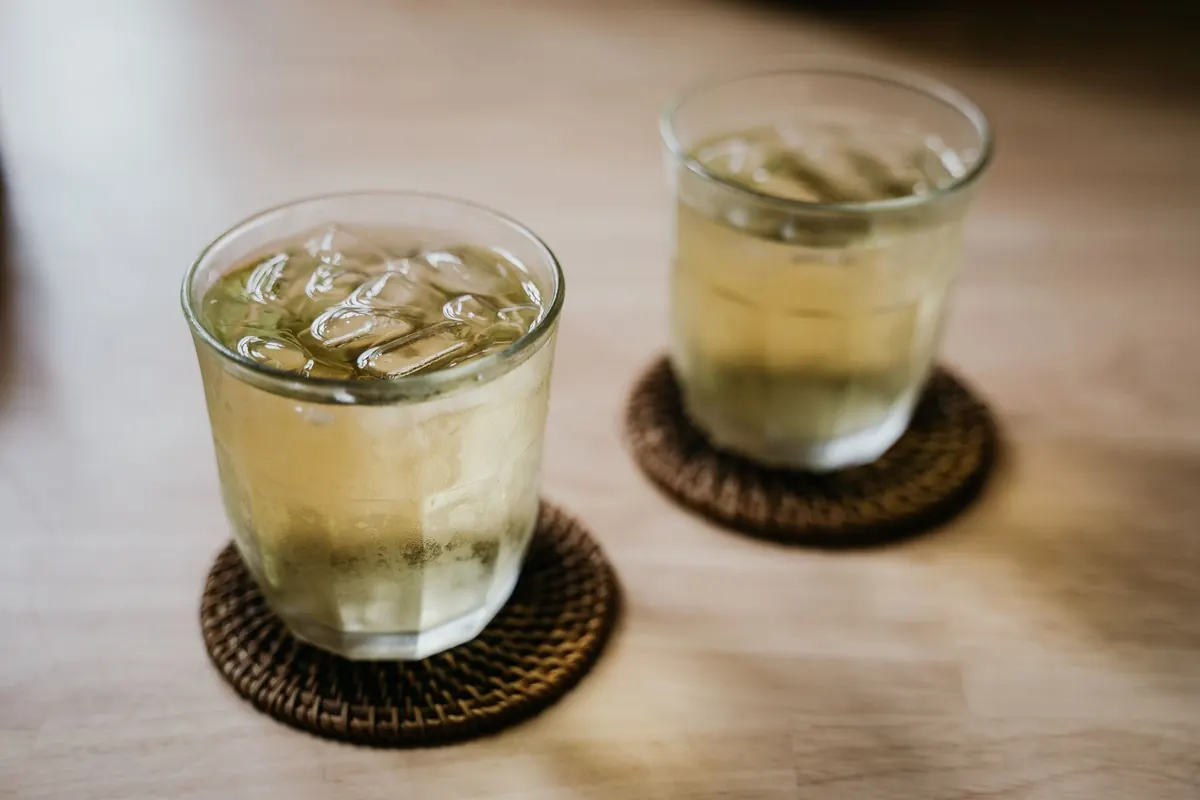
Ice is where good iced tea quietly falls apart. A glass packed with small cubes melts fast, and ten minutes later you are drinking pale tea water. Freeze some of your tea into cubes and use those, so the glass gets colder without getting weaker. Bigger cubes melt slower than crushed ice, and a glass chilled in the freezer for a few minutes helps more than you would think.
The ratio to remember: brew double strength, then dilute one-to-one with cold water or ice. If you are serving right away, pour the concentrate over ice and add cold water to taste rather than following a number.
Keep garnishes simple. A lemon wheel, a sprig of mint, an orange slice with black tea, lime with green. Add citrus and herbs shortly before serving, since peel oils and bruised leaves turn dull after a day in the fridge. For a lighter glass, top with sparkling water; for something richer, a splash of whole milk in strong Assam is worth trying once.
Make Ahead Without Regret
Brewed tea keeps well if you treat it like food. Store it covered in the fridge and drink it within three to four days; herbal blends, especially rooibos, hold a day or two longer. Keep the pitcher covered, because tea picks up whatever else is in there.
- Keep an undiluted concentrate in a quart jar and dilute by the glass.
- Add fruit, herbs and citrus to individual glasses rather than the whole pitcher.
- Freeze leftovers in ice cube trays instead of pouring them out.
- Discard any batch that smells sour or pours thick. Cloudiness alone is not spoilage; a sour smell is.
One note on sun tea: a jar steeping in warm sunlight sits in a temperature range where bacteria can multiply, and it does not get hot enough to brew tea well anyway. The fridge gives you the same gentle extraction without the guesswork. If you are watching caffeine, herbal blends and cold-brewed green tea are easy evening choices, and it is worth checking with a professional if caffeine matters for a health condition.
The Pitcher That Earns Its Space
The whole method fits in a sentence: brew strong, pull the leaves early, chill it fast, and sweeten with syrup rather than sugar. A quart made tonight — six teaspoons of loose leaf, four cups of cold water, twelve hours in the fridge — carries you through tomorrow afternoon.
Adjust as you go. If a batch tastes thin, use more leaf next time rather than steeping longer. If it tastes sharp, take the leaves out sooner. After two or three pitchers you will stop measuring, and that is the point.
Photo: Anna Tarazevich / Pexels
Related posts
More stories you’ll love reading